Global Leaders Seek Urgent Action as Desertification, Drought Threaten Livelihoods
Countries at UNCCD COP17 in Mongolia are seeking stronger investment, policies and practical measures to confront the growing global crisis of drought and land degradation.

 NewsmongerStory by Dare Akogun
The growing impact of drought, desertification and declining land productivity has come under global scrutiny as representatives of 196 countries and the European Union gather in Ulaanbaatar, Mongolia, for the 17th session of the United Nations Convention to Combat Desertification, UNCCD COP17.
The two-week meeting is expected to produce new policies, partnerships and funding mechanisms aimed at restoring degraded land, improving drought preparedness and protecting communities whose livelihoods depend on agriculture, grazing and other land resources.
The urgency of the discussions is underscored by UNCCD figures showing that land degradation and drought affect up to 3.2 billion people and cost the global economy nearly $900 billion every year.
Drought alone has increased by almost one-third since 2000, resulting in at least $300 billion in annual economic losses.
Mongolia’s Prime Minister, N. Uchral, urged countries to move beyond promises and focus on actions that can deliver measurable results on the ground. He also called for stronger investment and cooperation between governments, financial institutions and the private sector.
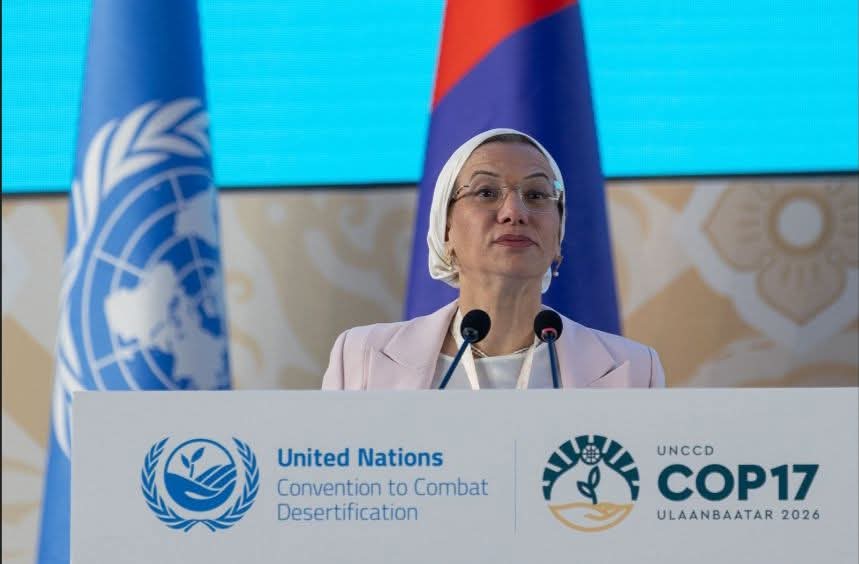
UNCCD Executive Secretary, Yasmine Fouad, said the consequences are already affecting food production, water supplies, economies and communities, insisting that existing solutions must be taken to a larger scale.
A major challenge before the conference is funding. The UNCCD says about $355 billion is required every year to address land degradation and drought, against current investment of only about $77 billion, creating a financing gap of roughly $278 billion annually.
Delegates are expected to examine ways of attracting more private-sector investment while reducing risks associated with land restoration projects.
Drought preparedness will also receive major attention, including early-warning systems, vulnerability assessments and national drought management plans. More than 70 countries have now developed such plans, compared with just three in 2013.
The conference is equally focusing on rangelands, which cover about 54 per cent of the world's land surface and support the livelihoods of roughly two billion people.
A new global initiative is expected to promote sustainable rangeland management and strengthen the livelihoods of pastoral communities.
The discussions are particularly significant for Africa, where desertification, drought and climate pressures continue to affect food production, water access and rural economies.
For Nigeria, stronger international cooperation and access to climate and restoration finance could support efforts to combat desertification, improve soil productivity and strengthen drought resilience, particularly in vulnerable northern communities.
COP17 is scheduled to end on August 28, when countries are expected to adopt decisions that could determine the next phase of global efforts to restore degraded land and prepare communities for worsening drought.
Join the conversation
No comments yet. Be the first to share your thoughts.
Leave a comment




From World

Two Convicted In France Over Live Streamed Death Of Digital Creator

US Imposes 15 Percent Tariff On Key Microchip Material To Counter China

Russian Ballistic Missile Attack Hits Kyiv, Killing At Least One

Bolivia deploys troops to Brazil border over rising gang violence
Mass Funeral Held in Gaza Following Recovery of 112 Victims from 2023 Strike
Iran, Oman Discuss Temporary Hormuz Shipping Route as US Talks Remain on Hold
Trending

Champions clinch title in dramatic extra-time finish

Tech giant beats forecasts on cloud and advertising strength

Cyberattack disrupts national transit ticketing system

Cabinet reshuffle brings four new faces to senior posts
